

At Municipal Value - Chapter 1
A short story written by Matt Gardner with PlotWeaver: Cards of Creation, a storytelling game made by Mod Hob Cooperative.

This story uses a Non-Linear Plot Pattern, written in 15-minute timed acts with all story cards drawn at random. For more information, visit www.plotweavergame.com
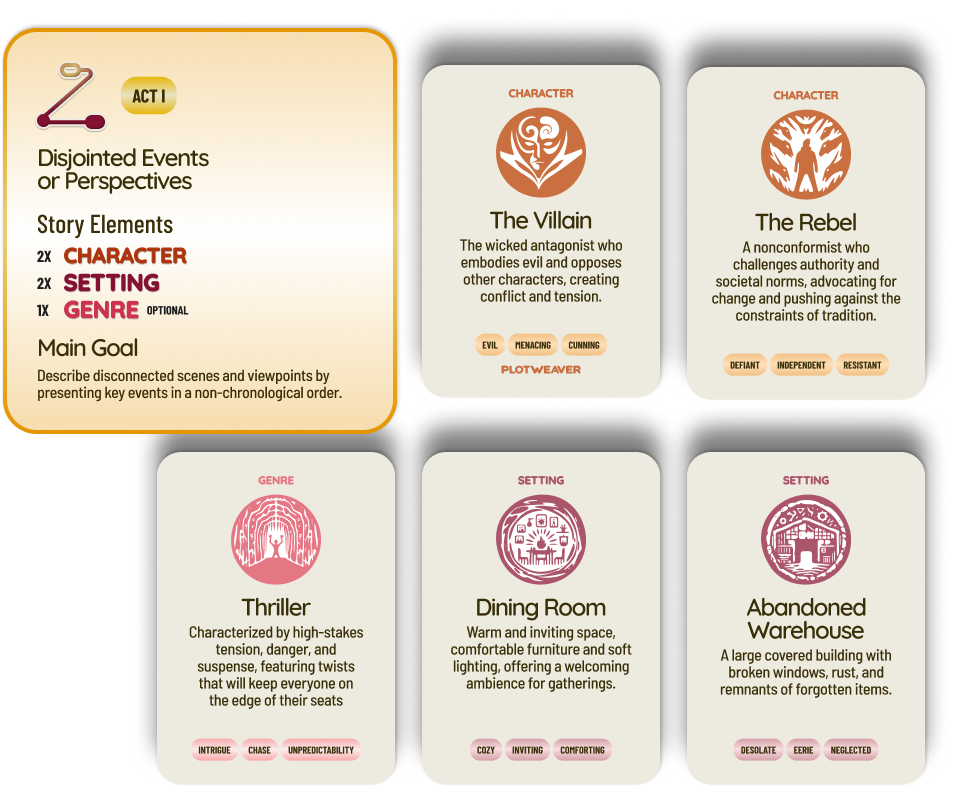
Act 1: Disjointed Events or Perspectives
(Story Element Cards: The Villain, The Rebel, Dining Room, Abandoned Warehouse, and Thriller)
John sat at the dining room table, content with his cooking skills.
“Masterful!” he exclaimed as he finished off his beef bone broth, which he had spent hours boiling down and preparing. A meal that was days, if not weeks, in the making.
But who, besides John, would witness this mastery?
“No. At this level, you can’t afford the complexities that come from friendship,” he replied to the indifference of one, his old, loyal dog Frank, who watched without judgment.
Kate moved through the dimly lit warehouse with grace. She had worked there for years before it closed. It was her second home. All the people she knew and loved had worked there. Now they were dispersed. Some in other Provinces, some stayed, but the defeat had changed many of them.
She was drunk, and in her logic, it was time to take it back.
After all, the employees had known the business far better than the owner. A man rarely seen. He bought the warehouse to bury it. He didn’t want the competition, she had heard. He wanted absence.
John cleaned up while listening to his favourite investment podcast, a gem called Put Yourself First: How to Succeed When Everyone Fails! It was a guide to buying assets low, remarketing them, and selling at maximum profit.
John’s favourite method was simple. Buy the competition in companies he already owned stock in. Run them into bankruptcy. Make money off the insurance. Reinvest until the field was quiet.
Order, he believed, was efficiency.
Kate couldn’t care less about John’s portfolio. In fact, she was about to create something John wouldn’t be able to extract from. Something that required people, not leverage.
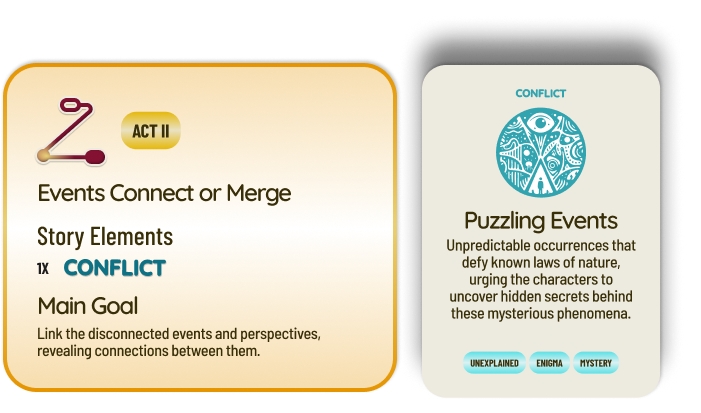
Act 2: Events Connect or Merge
(Story Element Cards: Puzzling Events)
Little did Kate know, but John still owned the building.
She triggered an alarm on John’s phone.
Office breach imminent. Is this you?
John clicked “No” without hesitation.
Immediately, Kate’s world shifted.
Lights flooded the warehouse. The air filled with the shrill screech of alarms, sharp and invasive, as if the building itself had been startled awake.
She knew exactly what to do. She was a keyholder once, and she had made a set before everything shut down.
She ran to the utilities booth on the ground floor beneath the second-floor admin offices and shut off the power. Then she disconnected the backup generators.
John was alerted to the outage. He had planned for this. Or so he thought. After all, he had paid millions for the security systems installed across his landholdings and real estate.
Redundancy was comfort.
Kate locked every entrance she could and barricaded herself in. She called former workers and told them the plan. Occupy the warehouse. Bring the jobs back. This time with no owners.
They would take back the means of production and offer something better to the customer. Something human.
Many refused. Fear lingered. But a small band of misfits and former managers arrived. Some with food and blankets. Some with computers. Some with personal generators and nothing left to lose.
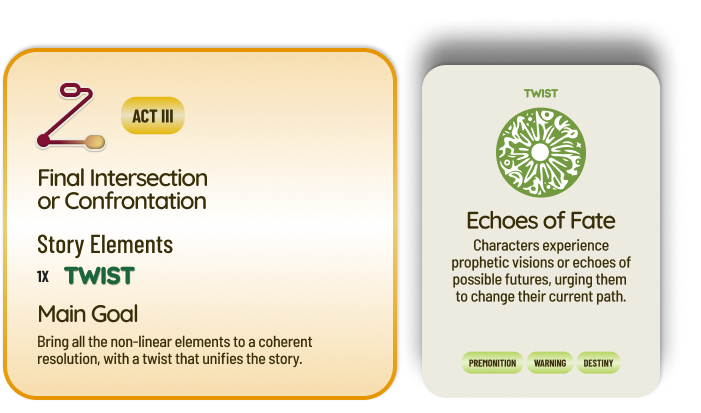
Act 3: Final Intersection or Connection
(Story Element Cards: Echoes of Fate)
Weeks passed.
The warehouse roared back to life as the cooperative took shape. Machines hummed. Laughter returned. The place remembered what it was for.
They gained public support. Even a few progressive, labour-aligned Members of Parliament took notice.
John watched from a distance, curious despite himself.
He admired them. This was action. It took dedication and hard work, qualities he respected, even if he rarely trusted them.
He still had the legal authority to shut it all down. Criminal charges would be easy. Efficient. Final.
But that would only confirm what everyone already thought of him.
A greedy parasite, as his ex-wife had labelled him in her exposé, following a divorce that the public had consumed eagerly.
John decided to meet them first.
Kate, Ali, Lee, and Karim sat across from him. Each had recently been elected to the cooperative board. They looked tired. Determined. Alive.
They presented their offer: to buy the building at municipal valuation. Members were prepared to remortgage their homes and work themselves thin to secure it.
John listened. Calculated.
Then he made his move.
He offered to sell the building for a dollar.
Generous. Shocking. Framed as goodwill.
And then the second part, an investment. Fifteen percent ownership. A board seat.
A way in.
The room went quiet.
Kate understood immediately. The offer wasn’t charity. It was proximity. With one foot inside, John would eventually have leverage over decisions, over people, over the fragile lives they were rebuilding.
The cooperative declined.
They countered with municipal value. No ownership beyond that. No seat. Only a promise of good faith and transparency in the media.
John studied them. Truly this time.
They shook hands.
John thanked them.
The story would still play well publicly, perhaps even better. A magnate stepping aside. Respecting the will of the workers.
As he left, John noticed something unfamiliar.
For the first time in a long while, the outcome wasn’t his.
And behind him, the warehouse kept working — without him.